Rainbow Flower Clipart: A Practical Guide to Selection and Application
In the realm of digital design resources, the specific aesthetic of Rainbow Flower Clipart has emerged as a distinct category that bridges the gap between whimsical illustration and functional graphic assets. This style is characterized by vibrant floral illustrations that utilize bold rainbow tones alongside soft, blended gradients. Unlike traditional botanical illustrations that prioritize realism or muted earth tones, this approach leverages high-saturation color palettes to create immediate visual impact. For designers, crafters, and content creators evaluating their next project assets, understanding the nuances of this clipart style is essential for making informed decisions about resource allocation and creative direction.
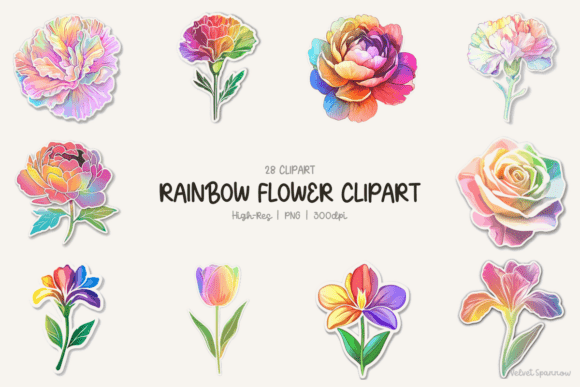
The core value proposition of this specific collection lies in its versatility and technical readiness. Typically comprising 28 PNG files at 300 DPI, these assets are engineered for both digital manipulation and physical reproduction. The inclusion of a clean sticker-style edge on each flower—ranging from roses and tulips to lilies, peonies, and decorative blossoms—adds a layer of definition that separates the subject from the background without requiring manual masking. However, before integrating these elements into a workflow, it is necessary to evaluate how they compare to other available options and determine if their specific stylistic traits align with the intended output.
Distinguishing Features and Technical Specifications
When analyzing Rainbow Flower Clipart, the first differentiator is the rendering style. Most standard floral clipart falls into two broad categories: realistic photography-based cuts or flat, single-color vector graphics. Rainbow flower designs occupy a middle ground, offering a "sticker" aesthetic that implies depth through gradients while maintaining a playful, non-photorealistic look. The use of blended gradients allows for a smooth transition between colors, which is particularly effective when the goal is to add a cheerful pop of color to a layout without overwhelming it with chaotic patterns.
Technical specifications play a critical role in the utility of these assets. A resolution of 300 DPI is the industry standard for print quality, ensuring that when these images are used for sublimation, greeting cards, or printable wall art, the edges remain crisp and the colors do not pixelate. Furthermore, the PNG format with transparency is crucial for layering. In contrast to JPEGs, which include a white background that must be removed, PNGs allow for immediate placement over various textures, paper grains, or photographic backgrounds. The variety within a set of 28 files also offers significant advantage; having a mix of flower types like peonies and lilies ensures that a designer does not need to source multiple packs to achieve visual diversity within a single project.
Comparative Analysis: Rainbow Styles vs. Alternatives
To make an informed choice, one must weigh Rainbow Flower Clipart against other common design alternatives. One primary alternative is the "watercolor" style. Watercolor florals often feature bleeding edges, organic imperfections, and softer color transitions. While watercolor assets excel in creating a romantic, vintage, or handcrafted feel, they can sometimes lack the punch required for modern, youthful branding or children's educational materials. The bold rainbow tones of the clipart in question provide a higher contrast ratio, making them more legible at smaller sizes and more striking in busy compositions.
Another comparison point is vector-based line art or single-color silhouettes. Vector graphics offer infinite scalability and are ideal for minimalist designs where the user intends to apply their own coloring. However, this requires additional time and skill in software like Adobe Illustrator or CorelDRAW. If the objective is efficiency—such as quickly assembling a scrapbook page or designing a t-shirt for a limited-time event—the pre-colored, gradient-rich nature of rainbow clipart saves significant production time. The tradeoff is less flexibility in color customization; once the gradient is baked into the raster image, changing the hue requires more advanced editing techniques than simply filling a vector shape.
Furthermore, when compared to generic stock photography, clipart offers a cohesive stylistic unity. Mixing real photos of flowers with digital text and other graphic elements can sometimes result in a disjointed visual hierarchy. A curated set of 28 illustrations ensures that every element shares the same lighting logic, texture, and color saturation, creating a unified brand voice or project theme. This consistency is particularly valuable for series-based projects, such as a set of matching invitations or a coordinated planner kit.
Evaluating Use Cases and Project Fit
The decision to utilize Rainbow Flower Clipart should be driven by the specific requirements of the end product. This style is exceptionally well-suited for projects targeting younger demographics or those aiming for a fun, energetic vibe. For instance, in the creation of stickers and planner decor, the sticker-style edge mimics the physical object perfectly, enhancing the illusion of dimensionality. Similarly, for junk journals and scrapbooking, the bright, cheerful nature of the designs complements the eclectic, collage-like nature of these crafts.
In the realm of apparel and sublimation, the high saturation of rainbow tones translates effectively onto dark fabrics, provided the transfer process is managed correctly. The clean edges prevent the "halo effect" often seen with poorly cut images, resulting in a professional finish. For greeting cards and invitations, these assets work best for celebratory occasions like birthdays, baby showers, or spring festivals where a mood of joy and vibrancy is desired. They are less appropriate for formal events, such as corporate galas or somber memorials, where the playful aesthetic might undermine the tone.
Printable wall art represents another strong use case, particularly for nurseries, classrooms, or creative studios. The blend of bold tones and soft gradients adds visual interest without the complexity of fine detail that might get lost in a small print run. Additionally, for digital papers and craft projects, these images serve as excellent focal points or repeating pattern elements. The variety of flower types included—roses, tulips, lilies, and peonies—allows for the creation of complex bouquets or scattered arrangements that feel natural rather than repetitive.
Tradeoffs and Limitations to Consider
While the benefits of this clipart style are clear, there are inherent limitations that users must consider. The most significant tradeoff is the fixed color palette. Because the images are rendered with specific rainbow gradients, they may clash with existing brand guidelines that rely on a strict, monochromatic, or pastel color scheme. Unlike editable vectors, you cannot easily strip the rainbow effect to match a specific corporate identity without substantial reworking.
Additionally, the "sticker-style" edge, while beneficial for separation, can appear artificial in contexts demanding hyper-realism. If a project requires the viewer to believe the flowers are physically present in a photographed environment, the illustrative nature of the clipart will break that illusion. It is a stylized representation, not a simulation of reality. Therefore, it is best employed in designs where the illustrative medium is acknowledged and embraced as part of the aesthetic.
Another consideration is file management. With 28 individual PNG files, organization becomes a factor. Designers must ensure proper naming conventions and folder structures to avoid losing specific variations, such as distinguishing between a rainbow rose and a rainbow tulip during a fast-paced design sprint. While the volume of assets is a strength for variety, it requires a disciplined workflow to manage effectively.
Decision Factors for Resource Selection
Ultimately, the choice to incorporate Rainbow Flower Clipart depends on balancing aesthetic goals with practical constraints. If the project demands speed, vibrancy, and a cohesive illustrative style, this resource is a highly efficient solution. It eliminates the need for custom illustration while providing a level of polish that exceeds basic stock photography. The combination of 300 DPI resolution and transparent backgrounds ensures technical reliability across both digital and print mediums.
However, if the project requires strict adherence to a muted color palette, photorealism, or extensive color customization, alternative resources such as vector bundles or raw photography may be more appropriate. The decision matrix should prioritize the target audience's expectations and the final medium's capabilities. For adults aged 20–50 engaging in creative hobbies or small business ventures, this type of clipart offers a pragmatic balance of artistic flair and functional utility, serving as a reliable tool for bringing colorful ideas to life without the overhead of custom commissioning.